

Quick answer
There is no fixed figure — the entrance fee to Shanghai's food scene is 0 CNY, and dining costs vary entirely by establishment. Neighbourhood noodle counters, wet-market breakfast stalls, mall food courts and Bund fine dining occupy completely different tiers. The variable that moves spending most is not the district but the format: counter service, table service, or set menu. Arrive between 11:30–20:00 to see both peaks.
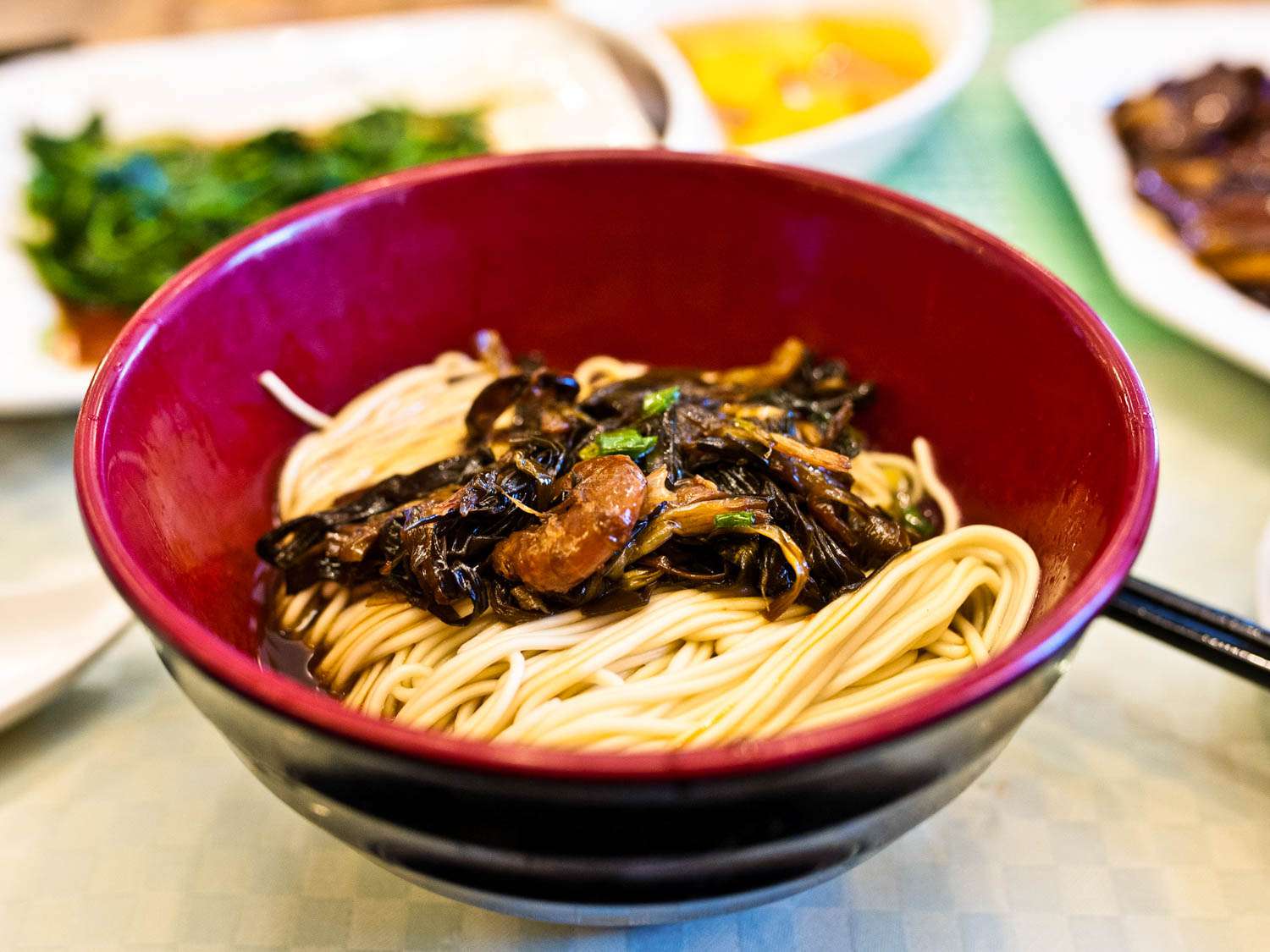
Shanghai's dining economy runs on a curious inversion: some of the city's most celebrated food is also its cheapest. Xiaolongbao steamed in bamboo at a lane-front counter, shengjianbao seared crisp on a flat iron, cong you bing folded and fried on a cart — these are canonical Shanghainese dishes, and they are sold at prices that have little to do with the skyline behind them. Meanwhile, a Bund-facing dining room with river views charges for the window as much as the plate. Understanding the cost of food in shanghai begins with separating the price of the food from the price of the setting. The city organises itself into loose culinary zones, and each carries its own pricing logic. The former French Concession trades in converted shikumen houses and terrace seating. Huanghe Road and the lanes around Yuyuan Garden still support old-guard Shanghainese kitchens. Hongqiao and Jing'an lean corporate, with lunch sets tuned to office schedules. Wet markets in Hongkou open early and close by mid-morning. Knowing which zone a visitor is standing in explains most of what the bill will look like — far more reliably than any single average figure. Shanghai food prices also shift by hour: midday sets and evening à la carte are different animals entirely, and the 11:30–20:00 window brackets both. Two practical notes shape spending more than menu prices do. First, portion conventions: Shanghainese dishes are ordered for the table, not the individual, so solo travellers overpay by default unless they choose counter formats or single-bowl noodle shops. Second, the language gap. Many neighbourhood kitchens post prices only in Chinese characters, and a translation app pointed at a wall menu resolves this in seconds. Travellers who skip that step tend to default to English-menu restaurants, which sit in a higher bracket almost without exception. The useful takeaway from any cost of food in shanghai guide is not a number but a method. Read the format before the price list: counter, table, or set. Check whether the kitchen faces the street or a view. Note whether locals are queueing. Those three signals predict a bill more accurately than a district name. The dedicated budget and venue sections on this site break the figures down properly, and guided eating routes handle the navigation for anyone who would rather not decode wall menus alone.
“Read the format before the price list: counter, table, or set.”
Understanding the Daily Cost of Food in Shanghai
Dining costs in Shanghai vary widely depending on whether you choose local street food stalls or upscale establishments. A daily food budget generally ranges from modest amounts for quick bites to higher figures for multi-course restaurant meals.
How to spend less
- Eat at local noodle shops for affordable daily meals
- Choose set menus during lunch hours to save
- Drink local tea instead of imported beverages
- Visit wet markets for fresh, inexpensive fruit
Travelers can expect to spend between 200 CNY and 600 CNY per person daily, depending on dining preferences.
Where to Eat for Every Cost of Food in Shanghai
Shanghai offers a diverse range of dining experiences, from quick street-side bites to refined international establishments. Navigating these options allows visitors to balance local culinary exploration with various budget preferences.
Wujiang Road
street
Located near the city center, this area features numerous casual stalls and local noodle shops ideal for quick, inexpensive meals.
Yuyuan Old Street
market
Found within the historic center, this market offers traditional dumpling houses and regional snacks suited for travelers exploring the area.
Xintiandi
restaurant
This district houses upscale international dining and sit-down establishments for those seeking a more formal atmosphere in central Shanghai.
Tianzifang
street
Situated in the French Concession, this area provides an array of small eateries and cafes tucked into narrow alleyways catering to diverse tastes.
Jing'an Temple Area
restaurant
This central zone offers a mix of modern cafes and established restaurants, providing varied options for lunch and dinner near major transport hubs.
The Best Time to Experience the Cost of Food in Shanghai
The best arrival window is 11:30–20:00, which offers the most consistent access to diverse dining options across the city. Timing your visits within this range helps balance demand and restaurant availability.
March to May
Moderate crowds; popular for tourismMild temperatures of 12°C to 22°C
Spring offers comfortable dining conditions. Outdoor seating is pleasant during this period
June to August
High crowds; peak travel seasonHot and humid, often exceeding 30°C
Summer sees increased demand near major attractions. Indoor air-conditioned venues are preferred
September to November
Moderate to high crowdsCooler, dry air with 15°C to 25°C
Autumn is a stable season for travel. Prices remain consistent with baseline expectations
Weekday afternoons
Low crowds; local dining peak—
Visiting between 14:00 and 17:00 allows for easier seating. Many establishments remain open throughout the afternoon.
Verdict: The optimal window is Tuesday to Thursday during the arrival window of 11:30–20:00, ideally in April or October.
Dining Etiquette and the Cost of Food in Shanghai
In Shanghai, the gap between the menu price and what you actually pay comes down to local habits around tipping, table service and payment. Knowing them keeps a meal predictable and avoids awkward moments at the till.
Do
- Set up Alipay or WeChat Pay with a foreign card before arriving
- Carry small yuan notes for street stalls and older noodle shops
- Accept the free pot of hot tea or boiled water offered
- Ask staff to scan the table QR code if ordering confuses you
- Check whether a service charge already appears on hotel restaurant bills
- Say thank you rather than leaving coins on the table
Don't
- Do not tip in restaurants, taxis or teahouses — it confuses staff
- Do not assume cash is welcome; many venues now decline notes
- Do not expect free refills of bottled water or soft drinks
- Do not order tap water; drink bottled, boiled or tea instead
- Do not photograph kitchen staff or other diners without asking first
- Do not stick chopsticks upright in rice or point them at people
Standard Operating Hours for the Cost of Food in Shanghai
Dining establishments in Shanghai maintain extensive operational availability throughout the week. Many venues offer service from early morning until late at night.
| Monday | 00:00–23:59 | |
|---|---|---|
| Tuesday | 00:00–23:59 | |
| Wednesday | 00:00–23:59 | |
| Thursday | 00:00–23:59 | |
| Friday | 00:00–23:59 | |
| Saturday | 00:00–23:59 | |
| Sunday | 00:00–23:59 |
Check availability
Common Questions About the Cost of Food in Shanghai
Everything you need to know about cost of food in shanghai