
Quick answer
Arrive between 11:00 and 12:00 to beat the peak lunch queues, which build sharply after midday and again from early evening.
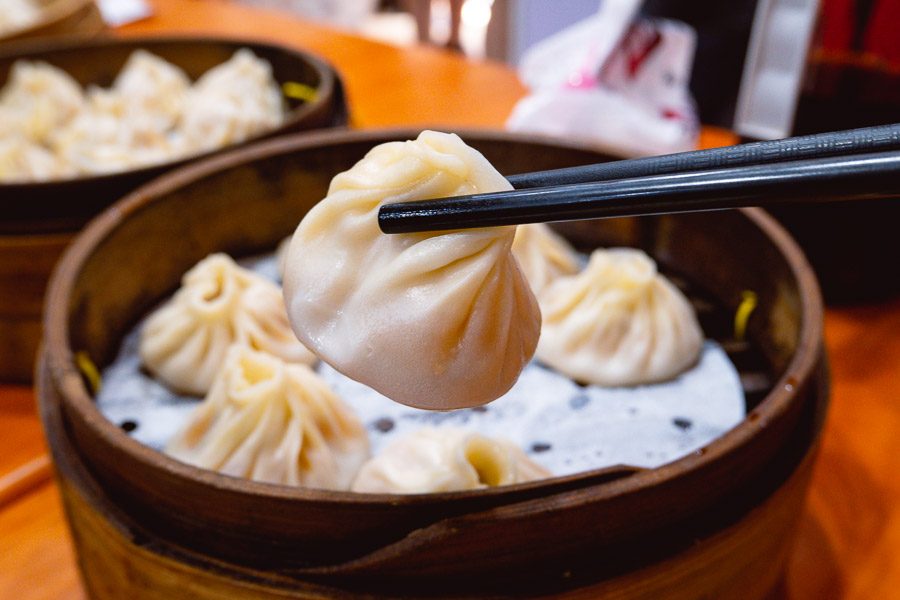
Shanghai's soup dumpling, the xiaolongbao, was never a Shanghai invention in the strict sense — it belongs to Nanxiang, a town absorbed by the city's northwestern sprawl, and it travelled inward until it became the dish visitors name first. That drift from periphery to centre describes the eating map generally. The city's most photographed food streets sit in Huangpu, but their recipes arrived from Ningbo, Suzhou, Yangzhou and further west, carried by migrant cooks who set up near the wharves. The practical consequence is that a shortlist of shanghai must eat restaurants is really a shortlist of regional traditions compressed into a few walkable blocks. None of it requires a reservation system foreign visitors can easily use. Most of it requires patience in a line. That line is the real variable. A Shanghai food tour of this district behaves differently at 11:15 than at 13:00, and the same counter that serves in four minutes at opening can take forty at peak. Kitchens here work continuously through a single daily service block rather than splitting lunch and dinner, so mid-afternoon is quieter but the turnover is slower and some steamers have emptied. Weekends compress the crowd further, particularly when domestic tourists overlap with office workers on Fridays. Summer adds its own pressure — August humidity pushes queues indoors and shortens tempers, and cold noodle dishes sell out earlier than the braises. Use the answer above as scaffolding rather than an itinerary. Fix the arrival hour first, then choose the dishes, then let the walk between Shanghai landmarks — the Bund is a few minutes east, People's Square a short ride west — absorb whatever waiting time remains. Payment is overwhelmingly mobile; carry a small amount of cash as a fallback and expect no service charge at counter-service venues. Readers planning a broader circuit will find the district works best as an anchor for a half-day of eating, with the guided options on this site handling the ordering and the language gap.
“A shortlist of the city's essential tables is really a shortlist of regional traditions compressed into a few walkable blocks.”
Defining Shanghai Must Eat Restaurants
Navigating Shanghai's culinary landscape requires a balance between iconic historic establishments and local neighborhood favorites.
restaurant
Located in the heart of Huangpu, this venue specializes in traditional local cuisine like braised pork belly and crab roe noodles.
Jia Jia Tang Bao
€street
Situated a short distance from the main tourist area, this spot is known for its freshly steamed soup dumplings.
Yang's Dumpling
€street
A popular local chain found throughout the city, offering crispy-bottomed pan-fried buns for a quick meal.
Old Shanghai Restaurant
€€€€restaurant
Positioned near the Yu Garden area, this establishment focuses on authentic Shanghainese cooking methods in a historic setting.
Pricing Structure at Shanghai Must Eat Restaurants
Dining at these locations does not require an admission fee. Costs are determined entirely by your individual food and beverage consumption.
Check availability
Common Questions About Shanghai Must Eat Restaurants
Everything you need to know about shanghai must eat restaurants